
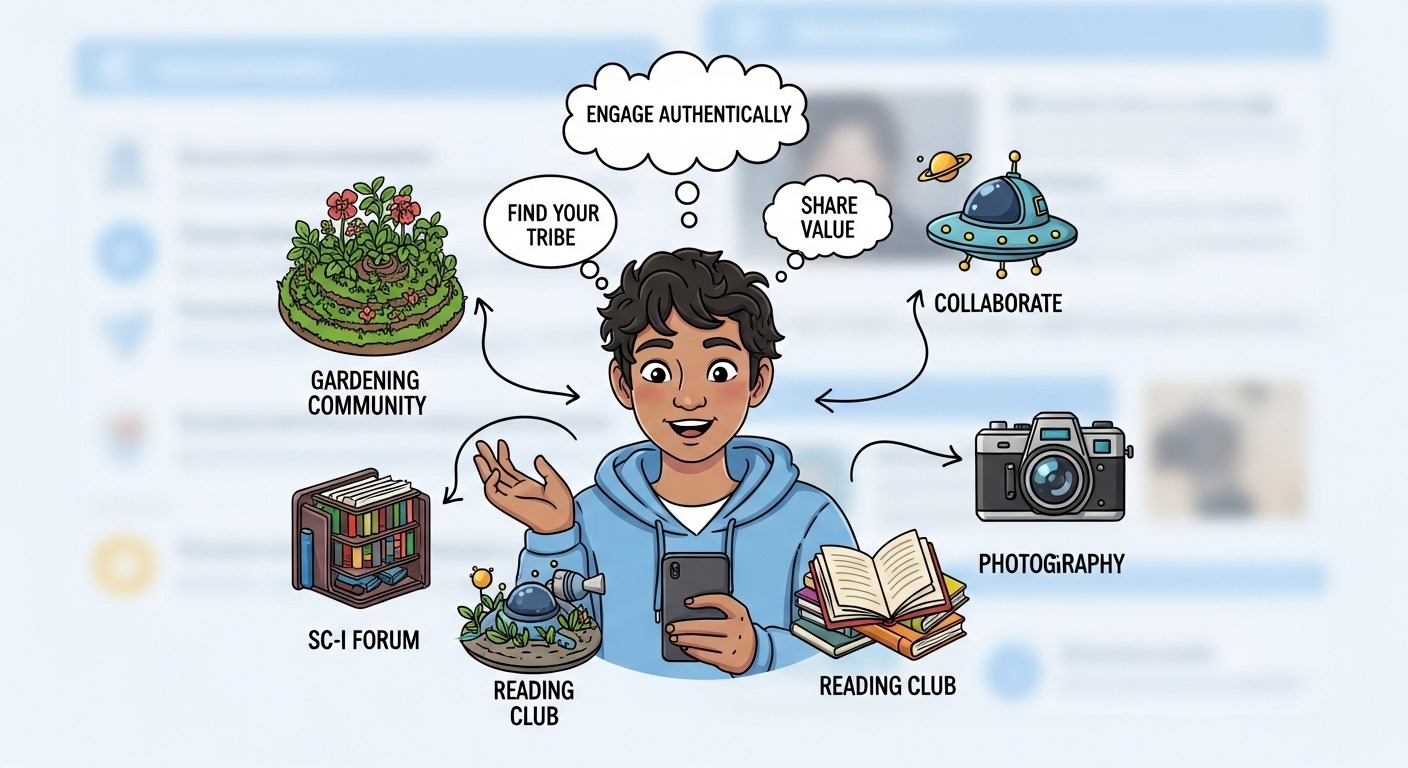
19 Nov Building Authentic Communities: Strategies for Better Growth on Niche Social Platforms
Imagine logging into a platform where every comment feels personal, every member knows your name, and conversations actually matter. That’s the magic of a truly authentic community—and it’s possible even in 2025’s noisy digital world.
Building authentic communities on niche social platforms has become one of the most powerful ways to create lasting connections. Unlike giant networks where algorithms bury your voice, smaller platforms like Circle, Mighty Networks, Discord, Geneva, or Substack let real humans shine through.
Recent studies back this up. According to a 2024 report from the Community Roundtable, members of niche online communities are 63% more likely to remain active after one year compared to broad social media groups. Additionally, Harvard Business Review found that customers who feel part of an authentic brand community spend 59% more over time.
In this guide, you’ll discover practical, battle-tested strategies that top community builders use today to grow meaningful spaces that people never want to leave.
Why Niche Platforms Win for Authentic Community Building
Big platforms chase scale. Niche platforms chase depth.
When you focus on a specific interest—whether sourdough baking, indie game development, or sustainable fashion—you attract people who already care deeply. Consequently, conversations start stronger, trust builds faster, and members become advocates.
Moreover, smaller user bases mean less noise. Your message reaches almost everyone. Algorithms favor engagement over reach, so genuine interactions get rewarded, not buried.
Finally, members feel seen. On broad networks, people broadcast. On niche platforms, people belong.
Strategy 1: Choose the Right Platform for Your Audience
Not every niche platform fits every community.
Before launching, ask three questions:
- Where does my audience already hang out?
- Do they prefer real-time chat, long-form discussion, or courses?
- What features matter most—events, monetization, mobile experience?
Popular options in 2025 include:
- Circle: Perfect for course creators and membership sites needing structure.
- Discord: Ideal for gamers, crypto enthusiasts, and highly interactive groups.
- Mighty Networks: Great for branded communities with courses and events.
- Geneva: Excellent for local or interest-based groups wanting simplicity.
- Substack + Chat: Powerful for writers building paid reader communities.
Test two or three platforms with a small beta group first. Then, listen carefully to feedback before committing.
Strategy 2: Define Your Community’s Core Purpose and Values
People join for belonging, but they stay for meaning.
Start by writing a one-sentence purpose statement. For example: “We help beginner watercolor artists gain confidence through daily practice and kind feedback.”
Next, create 4–6 clear community values. Examples include:
- Kindness first, critique second
- Celebrate small wins
- No self-promotion without giving value first
- Lifelong learning over perfection
Display these values everywhere—welcome messages, pinned posts, onboarding emails. When someone violates them, address it quickly and privately. Consistency builds trust.
Strategy 3: Craft an Onboarding Experience That Converts Visitors into Members
First impressions last forever.
A strong onboarding sequence can increase retention by up to 400% (according to 2024 research from CommunityLed).
Follow this proven five-step flow:
- Warm welcome message from the founder (personal video works best)
- Short “Start Here” guide with three actions only
- Quick wins—introduce yourself thread, resource library, upcoming event
- Personal touch—tag new members and ask existing ones to say hello
- Progress path—show them exactly how to go from newbie to valued member
Remember, overwhelmed new members leave. Keep it simple and human.
Strategy 4: Create Content That Sparks Conversation, Not Crickets
Great communities run on great conversations—not endless broadcasts.
Shift from “posting schedule” to “conversation starters.”
Try these formats that consistently drive engagement:
- Question of the week (open-ended, never yes/no)
- Member spotlights (“Share your biggest win this month”)
- Hot seat threads (one member asks for feedback, everyone helps)
- Resource round-ups curated from member suggestions
- Live AMAs with experts or long-time members
Moreover, reply to every single comment in the first 24 hours. Your response rate directly predicts community health.
Strategy 5: Turn Members into Co-Creators and Leaders
The fastest-growing communities don’t rely on one hero.
Instead, they distribute ownership.
Start small:
- Create member-led channels or subgroups
- Run monthly “takeover days” where members host
- Form a volunteer moderator team after 100 active members
- Let members suggest and vote on new features or events
Data from 2025 FeverBee research shows communities with active volunteer teams grow 3.2 times faster and experience 70% less burnout for founders.
Strategy 6: Host Events That People Actually Attend
Virtual events flop when they feel like Zoom school.
Successful ones feel like parties.
Follow this checklist:
- Keep sessions under 60 minutes
- Use interactive tools (live polls, breakout rooms, whiteboards)
- Record everything and share replays instantly
- Host recurring formats (Coffee & Co-working Fridays, Feedback Tuesdays)
- Celebrate attendance with badges or shout-outs
One niche photography community grew from 800 to 8,000 members in eighteen months simply by hosting free weekly portfolio reviews that members loved.
Strategy 7: Measure What Actually Matters
Vanity metrics lie. Healthy communities show different signals.
Track these five key indicators monthly:
- Weekly Active Members / Monthly Active Members ratio (aim >50%)
- Average replies per post (higher = better conversation)
- Member retention after 30, 90, and 180 days
- Percentage of posts created by members (aim >70%)
- Net Promoter Score from quarterly surveys
Tools like Orbit, Common Room, or simple Google Forms work perfectly for communities under 10,000 members.
Strategy 8: Moderate with Empathy and Consistency
Great moderation prevents drama and protects psychological safety.
However, over-moderation kills energy.
Strike the balance:
- Respond within minutes to red-flag behavior
- Use the “sandwich method” for corrections (praise → correction → praise)
- Create transparent guidelines and consequences
- Never shame publicly—handle everything in private messages
- Rotate moderators to prevent burnout
Remember, your moderation style becomes your culture.
Strategy 9: Monetize Without Selling Your Soul
Authentic communities can generate sustainable income—if you add value first.
Proven models in 2025 include:
- Paid memberships with exclusive content and events
- One-time workshops or masterclasses
- Sponsorships from brands that members already love
- Affiliate recommendations (only for tools you genuinely use)
- Member-only marketplace for services
Always overdeliver. One successful niche parenting community charges $149/year yet boasts 94% renewal because members say, “I’d pay triple for this support.”
Strategy 10: Keep Evolving with Member Feedback
The best communities never stay static.
Implement a simple feedback loop:
- Monthly “What should we start/stop/continue?” threads
- Quarterly anonymous surveys
- One-on-one calls with ten random members every cycle
- Public roadmap showing what changed because of feedback
When members see their ideas become reality, loyalty skyrockets.
Related Topics: Pixel Bootloop Fix Without Factory Reset
Conclusion
Building authentic communities on niche social platforms takes more heart than hustle. Choose the right home for your people. Lead with clear values. Onboard warmly. Spark real conversations. Share leadership. Host memorable events. Measure health, not hype. Moderate with care. Monetize thoughtfully. Evolve constantly.
Start today with one small action: write your community’s purpose statement and three core values. Share them with ten potential members and ask for honest thoughts.
Your future community is waiting to meet the real you.
Ready to build something that matters? Pick your platform, invite your first ten members, and begin. The best time to start was yesterday. The second-best time is right now.
Related Topics: Free AI Image Generator Without Login
FAQs
What are the best niche social platforms in 2025?
Top choices include Circle for structured membership sites, Discord for real-time interaction, Mighty Networks for branded experiences, Geneva for simplicity, and Substack for writers building reader communities.
How long does it take to build an authentic community?
Most healthy communities reach the “escape velocity” stage (self-sustaining conversations) between months four and twelve, depending on niche size and founder consistency.
Can introverts build thriving online communities?
Absolutely—many of the most successful community builders are introverts who excel at deep listening, thoughtful moderation, and creating spaces where everyone feels safe to share.
Should I allow anonymous posting in my community?
Generally no. Real names (or consistent pseudonyms) increase accountability and trust. Anonymous posting often lowers conversation quality dramatically.
How many members should I aim for in year one?
Focus on depth over numbers. A highly engaged community of 200 members creates more value (and revenue) than a disengaged group of 5,000.
References
- The 2024 State of Community Report – Community Roundtable: https://communityroundtable.com/research/the-state-of-community-2024
- Harvard Business Review – The Power of Community in Business: https://hbr.org/2023/09/the-new-science-of-customer-community
- FeverBee Community Growth Study 2025: https://www.feverbee.com/community-growth-study-2025
- CommunityLed Retention Research 2024: https://communityled.co/retention-report-2024
No Comments